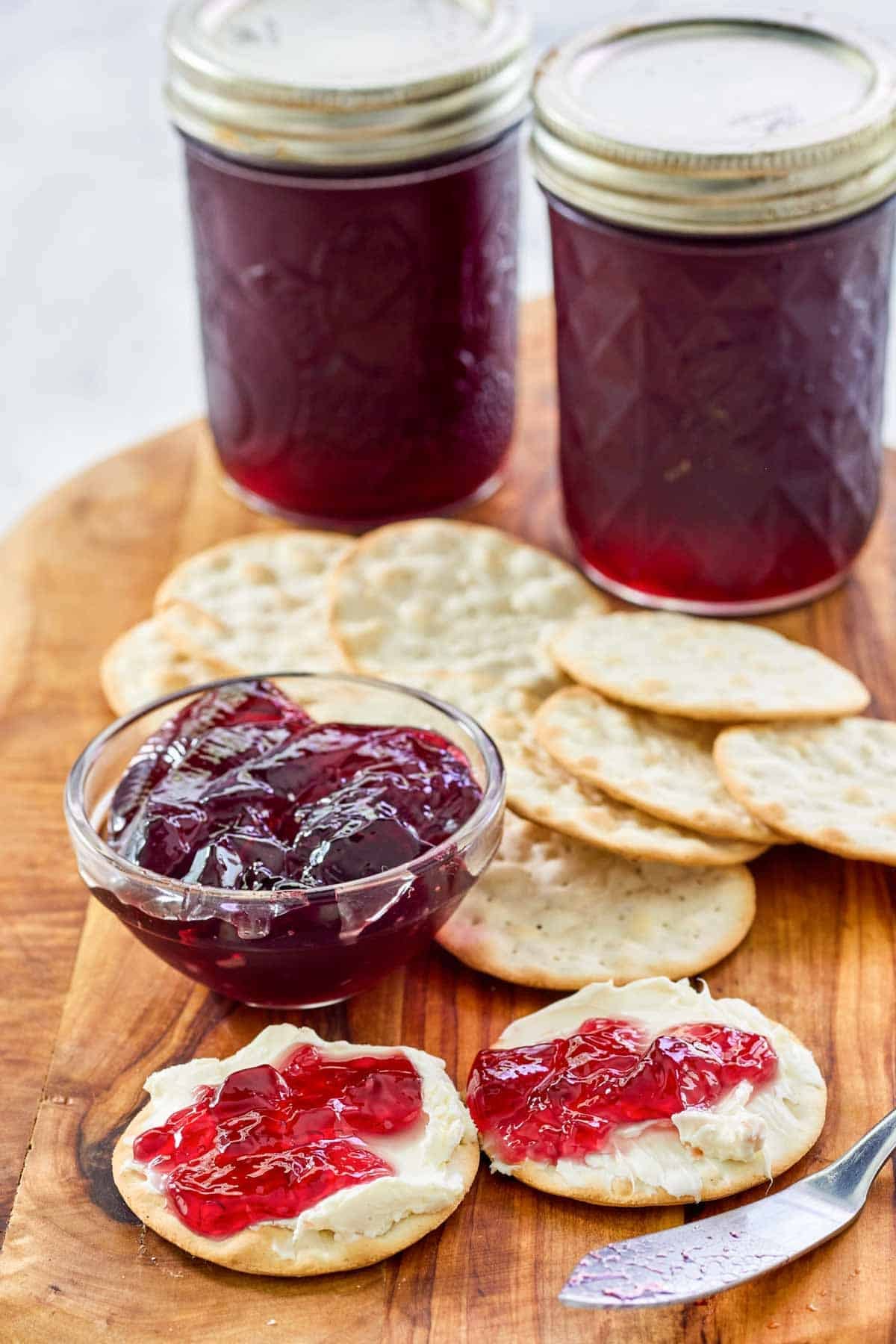
Wine Jelly
A simple three-ingredient preserve made with wine, sugar, and liquid pectin. Works with red, white, or rosé. Ready to jar in under 30 minutes.
Servings 48
Calories 50kcal
Ingredients
- 2 cups wine (your favorite type)
- 3 cups sugar
- 1 package liquid Certo pectin
Instructions
- To sterilize the jars, wash the jars, lids, and bands in hot, soapy water. Rinse well. Place the empty jars upright on a rack in a large pot or boiling-water canner. Fill the pot and the jars with hot water, making sure the water covers the tops of the jars by at least 1 inch. Bring the water to a boil, and boil the jars for 10 minutes. Carefully remove the hot jars one at a time, draining the water back into the pot. Keep the jars hot until ready to fill. For higher elevations, add 1 additional minute of boiling time for every 1,000 feet above sea level.
- In a medium saucepan, combine the wine and sugar. Stir until the sugar is fully dissolved. Bring to a boil over medium-high heat. Boil for 1 minute, stirring as needed. Add the liquid Certo pectin and stir to combine. Bring the mixture back to a boil, and boil for 1 more minute.
- Carefully pour the hot jelly into the prepared hot jars. Seal the jars and allow the jelly to cool until set. Store according to your preferred canning or refrigeration method.
Recipe Tips
- The full rolling boil is not negotiable in this recipe. A simmer or a light boil will not activate the pectin properly, and the jelly will not set. The boil must be vigorous enough that stirring does not slow it down.
- Skimming the foam before filling jars is worth the extra minute. The foam is mostly air bubbles and, if left in, can cause cloudiness in the finished jelly. A few passes with a fine-mesh skimmer clear it quickly.
- If the jelly looks soft after the jars cool, give it 24 to 48 hours before drawing any conclusions. Pectin continues to firm up as the jelly cools completely, and judging the set while the jelly is still warm will almost always make it seem underdone.
- Wine jelly also doubles as a savory glaze. Warm it gently in a small saucepan and brush it over pork tenderloin or chicken thighs during the last few minutes of roasting for a quick, flavorful finish.
Nutrition
Calories: 50kcal | Carbohydrates: 12g | Protein: 0g | Fat: 0g | Saturated Fat: 0g | Cholesterol: 0mg | Sodium: 0mg | Potassium: 3mg | Fiber: 0g | Sugar: 12g | Vitamin C: 0.1mg | Calcium: 1mg | Iron: 0.1mg
Tried this recipe?Mention @CopyKatRecipes or tag #copykatrecipes!